

Fintech
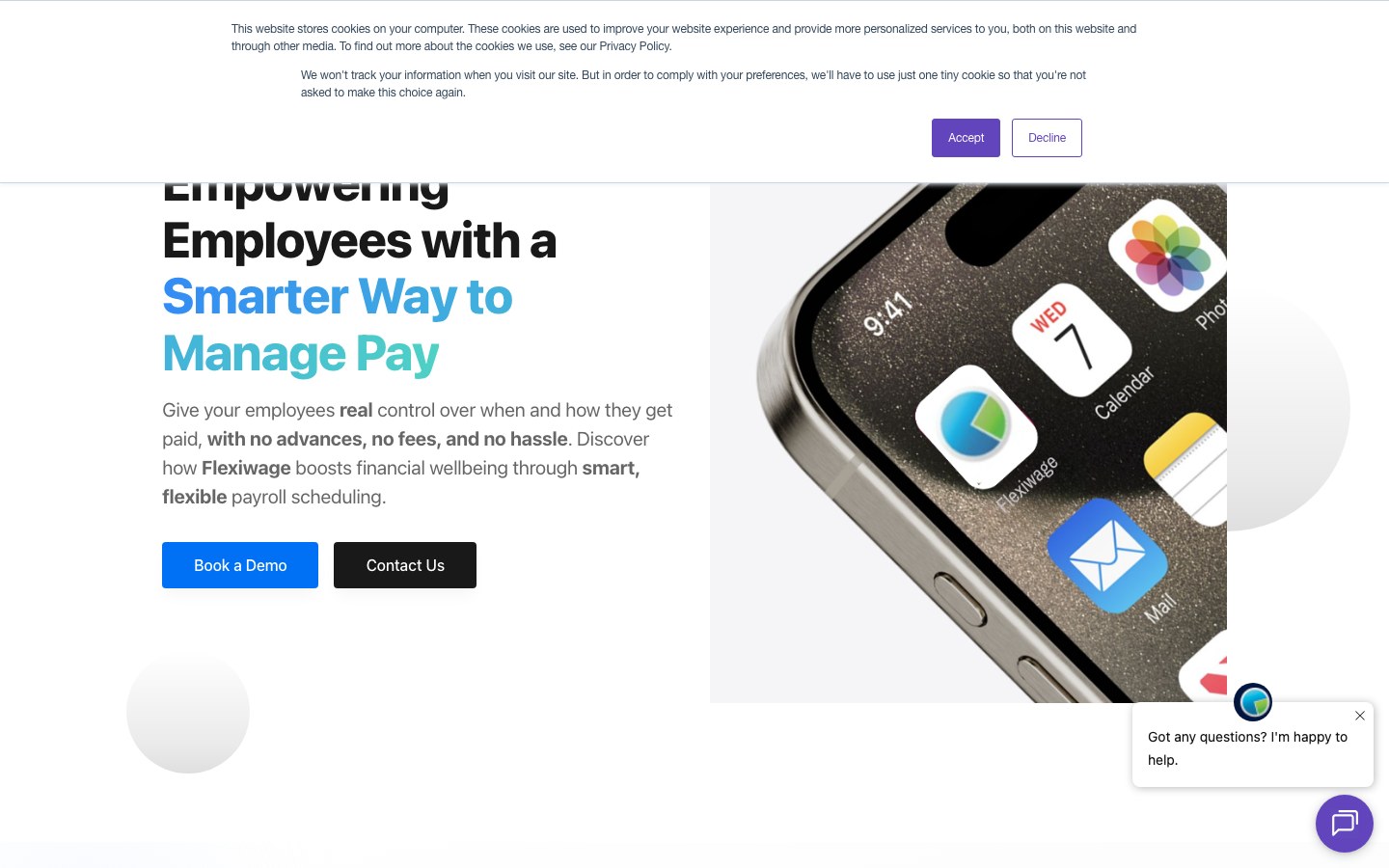
StationOps partnered with Flexiwage to modernize production operations, strengthen audit readiness, and optimize cloud spend for a regulated fintech workload deployed on Microsoft Azure.
Engagement
6 weeks, embedded delivery
Team
Platform lead, SRE, Cloud architect
Focus areas
Reliability, compliance, cost optimization
99.9%
Payroll pipeline availability
35%
Reduction in mean time to recovery
28%
Cloud cost reduction
2×
Safe deploy frequency


Situation
Flexiwage is a regulated fintech platform that processes payroll advances and earned-wage access payments, with production deployed on Microsoft Azure. Growing transaction volumes and tightening compliance requirements were straining the team’s ability to maintain uptime, pass audits, and control cloud costs.
Reliability
No formal SLOs for payroll-critical workflows, alerting based on infrastructure thresholds rather than business impact.
Compliance
Manual audit evidence collection, no policy-as-code, deployment approvals tracked in spreadsheets.
Incidents
Reactive firefighting with no severity model, unclear ownership, and no post-incident review process.
Cost
Over-provisioned compute for batch payroll jobs, no per-team spend visibility, costs growing ahead of revenue.
What we did
01 Reliability baseline & SLO architecture
Defined service-level objectives for the payroll pipeline, payment processing, and employer-facing API — covering availability, latency, and data freshness. Rebuilt alerting around error budgets tied to business impact so the team gets a clear signal when real users are affected, not when infrastructure metrics fluctuate.
02 Compliance-safe platform controls
Introduced policy-as-code checks into the CI/CD pipeline, automated deployment evidence collection for audit trails, and added release guardrails that enforce approval gates without blocking the team’s shipping cadence.
03 Incident response & recovery
Stood up a severity model aligned to payroll-cycle impact, on-call escalation paths, and a post-incident review framework with corrective-action tracking. Delivered runbooks for the highest-risk failure modes so responders could act within minutes instead of improvising.
04 Cost & capacity optimisation
Right-sized Azure compute for batch payroll processing, eliminated idle resources across non-production environments, and introduced per-team spend dashboards with monthly review cadences — cutting cloud costs while preserving headroom for payroll-cycle peaks.
Flexiwage — delivery summary
Over six weeks we embedded SLOs for payroll-critical paths, policy-as-code and automated audit evidence in CI/CD, an incident severity model with runbooks and MTTR focus, and cost controls with per-team dashboards — then transferred ownership through workshops.
Below is the full published narrative: situation assessment, each workstream, deliverables, timeline, ROI comparison, outcomes, and customer quote.
Deliverables
- SLO framework — service-level objectives for payroll pipeline, payment processing, and employer API with error-budget tracking.
- Incident operations playbook — severity model, escalation paths, runbooks for critical failure modes, and post-incident review framework.
- Compliance automation — policy-as-code in CI/CD, automated deployment evidence, and release approval gates for audit readiness.
- Infrastructure standards — Terraform modules for Azure with policy validation, environment parity controls, and release guardrails.
- Cost & capacity dashboards — per-team spend visibility, batch-job right-sizing recommendations, and monthly review cadence.
- Internal enablement workshops — hands-on sessions covering SLOs, incident response, compliance controls, and cost management.
Technologies & approach (at a glance)
Microsoft Azure production estate; service-level objectives and error budgets for payroll, payments, and APIs; user-impact–based alerting; policy-as-code and deployment evidence in CI/CD; Terraform modules with policy validation; incident severity tiers, on-call escalation, and post-incident reviews; batch and environment right-sizing with per-team cost reviews.


Timeline
Six weeks from discovery to full operating-model handoff, with SLO alerting and compliance controls live by week three.
Week 1 Discovery & risk baseline
Service dependency mapping, failure-mode inventory, SLO target definition, and compliance gap analysis.
Weeks 2–3 SLOs, alerting & compliance controls
Error-budget alerting live, policy-as-code in CI/CD, deployment evidence automation, and incident severity model rolled out.
Weeks 4–5 Cost optimisation & hardening
Batch-job right-sizing, idle-resource removal, per-team cost dashboards deployed, and incident playbooks tested in production.
Week 6 Embed & transfer
Operating cadence embedded, enablement workshops delivered, and full knowledge transfer to the Flexiwage team.
Impact & ROI
Flexiwage doubled its deploy frequency while hitting 99.9% payroll-pipeline availability — the metric that directly protects revenue and regulatory standing. The 28% cloud cost reduction began paying back the engagement immediately, and automated compliance evidence cut hours of manual audit prep every cycle.
Building this internally — hiring SRE and compliance engineering capacity, reworking CI/CD for audit trails, and defining SLOs for regulated workloads — would have left the platform exposed through multiple payroll cycles.
| Dimension | Typical internal, manual build | With StationOps engagement |
|---|---|---|
| Timeline | 5–8 months to hire SRE capacity, automate compliance, define SLOs, and rework CI/CD for audit readiness. | 6 weeks — compliance controls and SLO alerting live by week three, full model handed off. |
| Engineering effort | 4–7 person-months (≈ 640–1,100 hours) of senior engineers pulled off product and compliance work. | Engineering team stayed on product — StationOps delivered reliability and compliance in parallel. |
| Fully-loaded cost | Roughly €60k–€150k in engineering time, plus regulatory risk of manual compliance controls. | Engagement paid for itself through 28% infra savings, automated audit evidence, and avoided incident costs. |
Figures shown are typical ranges for comparable work and will vary by baseline maturity, constraints, and team size.
- Payroll pipeline hardened — 99.9% availability target met and sustained through peak payroll cycles with SLO-driven reliability and proactive capacity planning.
- Faster incident recovery — 35% reduction in mean time to recovery through structured runbooks, severity-based triage, and clear escalation ownership.
- Cloud spend reduced — 28% cost saving from batch-job right-sizing, idle-resource removal, and per-team spend dashboards preventing drift.
- Shipping velocity doubled — 2× safe deploy frequency enabled by compliance-safe release guardrails and automated deployment evidence.
“StationOps gave us a model our team could actually sustain. We hardened reliability and compliance without slowing product delivery.”
Running regulated workloads on Azure?
We harden reliability, compliance, and cost controls for fintech platforms on Azure — so your team ships faster without the risk.
Related case studies
Assiduous
How StationOps delivered a six-account Control Tower Landing Zone, SLO-based operations, and ongoing managed AWS for an AI-enabled corporate finance platform — in weeks instead of months.
Auth.inc
How StationOps delivered a production multi-region AWS adtech platform — ECS, EKS, Aurora, MSK, CloudFormation, and CD from Azure Pipelines — in twelve weeks.
DigiPro
How StationOps helped DigiPro cut incidents, speed up safe releases, and reclaim engineering time — with SLOs, observability, CI/CD guardrails, and cost visibility in twelve weeks.
SimpleCGT
How SimpleCGT reached 99.9% uptime through filing season, cut P1/P2 incidents and infra cost, and embedded observability, SLOs, and governance in four weeks.